Thursday, 31 August 2017

"My Characters Surprise Me"

Quite often in fiction writing, I hear someone observe that their characters surprise them. Some writers regularly talk about their characters as if they were independent people, whose actions the writer can't predict.

Personally, I find this slightly annoying: it's rather twee, and gives strength to the false impression that the writer is a sort of conduit through which the story flows, as if the writer's brain isn't controlling the story so much as surrendering to the spirits like a medium. Writing is, I think, a craft, and as such can't be done well by either a mechanical process or subconsciously. The correct method lies somewhere between the two.

(And don't get me started on people who talk endlessly about how awesome/messed up their characters are. First, they're not real, and, second, I don't care.)

However, while I'm never going to like the idea, I can actually see what people mean when they say that their characters surprise them.


Chekov's Gun, In Reverse

Might come in handy later
 

In a novel, it's a pretty basic rule that the characters can't and shouldn't do things that they wouldn't  concievably do. You've probably heard of Chekov's Gun: if the audience are told that there is a gun hanging on the wall, they will expect it to be used. This cuts the other way, too: if the story requires a gun to be produced in Act 3, it should be clear before then that it is possible that this might happen.

So, characters and events shouldn't happen that are completely unexpected, even if that expectation is only one of a number of possible outcomes. In that way, characters are predictable (or at least should operate within a range of predictable outcomes), and shouldn't be surprising the writer by suddenly acquiring abilities and histories that weren't hinted at before.

(I suppose I could imagine a story where a character acted wildly out of character, but I would expect the emphasis of the story to be about discovering why they did that. One example might be a mild-mannered man becoming a terrorist, or a spy being revealed as a double agent.)


A Range of Choices

That said, just because a character behaves in a certain style, that doesn't mean that there's no room for choice. When confronted with a large group of enemies, a veteran soldier might decide to attack, fall back, or just give up: depending on the circumstances, all of these might be decisions that that man might reasonably have made. And sometimes the author decides that one reasonable decision is better to the one that he'd originally planned to use.

Attack!


I think this is what writers mean when they say that their characters surprise them. You reach page 110, when Sergeant Jones is about to die bravely in a hail of bullets, and realise that, actually, it's much more powerful if he decides to surrender and the enemy shoot him anyway.


The Result

Of course, the writer has to be able to deal with the resulting fallout and its effects on the story. The murder of Sergeant Jones means that the enemy now look much more evil to the reader, and the reader is likely to want more payoff as a result. It's important not to lose your grip on the plot or the tone, or to let things done on a whim derail the novel. Because ultimately, no matter what your characters may or may not "decide" to do, it's your book.


Friday, 18 August 2017

How Not To Stop

I wrote a post a while ago about deciding what you were going to write about, and what form that writing was going to take. Even if you're certain that your idea deserves 70,000 words or more, and you're enjoying writing them, there are going to be points where the book feels like a slog, and the writing seems to be something you need to plough through to get to the next interesting bit. Below are some ideas of how you can keep going. As ever, they work for me, but your mileage may vary.


1. Identify the "way points" along the route


A row of peaks, somewhere or other.

If you have any idea of what is going to happen in this novel (which you should have) you'll know that there are certain important scenes that have to be included. Pirates arrive on Danger Island; the dog falls down a ravine; Anne and Julian argue about George. What you're writing isn't a single long slog from A to Z: much of the time you're working towards the next point of excitement - hangliding to the next peak, if you like. If you can break it up like that, it looks like much less of a struggle.


2. Can you skip ahead?

When I wrote Straken, I was working to a time limit. I needed to be producing 500 words a day, if not more (and for someone writing to order, that's a fairly lenient time frame). The option to just stop and wait for inspiration wasn't there.I found the easiest way to keep going was to jump ahead to the next part whenever I got stuck. This worked because I had a pretty good plan from which to work, and was able to resume the story at a later point without worrying that doing so would damage the stuff I'd already written.

Of course, this can leave you with some awkward gaps in the text, which you have to go back and fill. Filling gaps is never the most fun element of writing. But, if you're looking at the book as a set of connected "way points", when you go back, you'll probably be working towards another way point, and hence will have something exciting to aim for. Of course, if it still seems dull, you need to ask yourself...


3. Do you actually need this bit?


And when exactly is this happening?

This can be a very difficult question to answer. Ideally, everything that happens in a novel both moves the plot forward and develops the characters of the protagonists, preferably while upping the stakes. Sometimes it only does one of these things, and it's necessary to make the decision whether or not to keep it in.

Say two characters are going to assassinate a politician. Do we need to learn about the journey they took to the politician's house? Maybe we do, because on that journey they discussed their motives and an important realisation was made. Or perhaps the technicalities of the assassination are very difficult, and so their discussion will give the reader an idea of what needs to happen for the assassination to occur (and which then goes completely wrong). But maybe the journey is just there to pad out the word count. In a way, this is a bit like the question of where you begin a story.

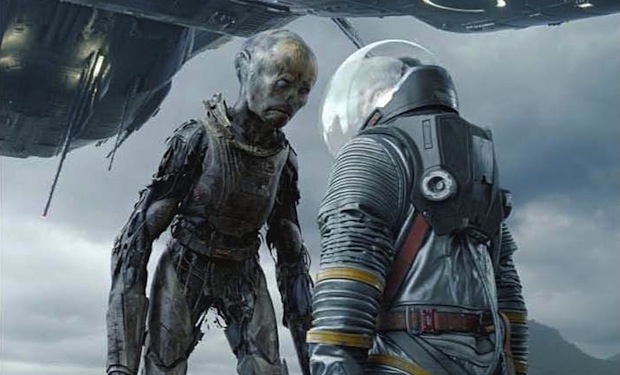
However, too much cutting and the story loses its flow. One of the (many) flaws in Prometheus was that there was no way of knowing how long it was all supposed to be taking. The ship landed on a planet, some things happened to various people, perhaps at the same time, and it all ended. My suspicion is that it was heavily - and unevenly - cut. The best plan, I think, is to cut, but to save what you cut just in case you cut too much.


4. Don't ask for permission to keep writing

I've seen this on forums and in writing groups: a person writes a chunk of their novel, then puts it up for comments before writing the next bit, effectively asking for permission to continue with it. I suspect that this is an easy habit to get into, and it's probably rather comforting to know that nobody you know has told you that it's rubbish yet.

I think this is a bad habit. It risks the writer working for approval of a group that may not represent the world at large and probably doesn't represent the writer himself. At the extreme, it's not much different from saying "I want to write about a wizard: please tell me what to say".

Discovering what you can and can't do is important. If you are going to be original, you need to write about what matters to you, not what a committee approves. Of course, you'll have to write it well, but that's another story (so to speak). The important thing is that you're writing at all.

Sunday, 6 August 2017

Passive Characters and the Passive Voice


People sometimes talk about avoiding "the passive" in writing, but the expression tends to be used to refer to a couple of things.

First, passivity in a character is what it sounds like. A passive character is one that things happen to. The character doesn’t take action or make decisions: he is just affected by stuff. To use modern jargon, he has no agency. I sometimes suspect that one of the main differences between literary and genre writing is that a lead character in a literary novel is much less likely to be dynamic. 

Generally speaking, passivity in characters is hard to warm to. Characters who are dynamic are more appealing to read about, because they move the plot forward. My own feeling is that, unless you are going to do something very clever, writing about a character who is fundamentally passive – a man locked in a cell, for instance – is a risk. Of course, once the man is working out a way to escape from the cell, he’s no longer passive any more…

Second, however, the Passive Voice is something different, as in the criticism that a writer is using too many “passive verbs”. "Voice" tells you whether the subject of the sentence is doing the verb, or having the verb done to them.

The passive voice is the opposite of the active voice. “I hit Bob” is active, because the subject of the sentence, me, is doing the action, namely hitting Bob. “I was hit by Bob” is passive, because the subject of the sentence, still me, is being affected by the action, namely being hit by Bob. However, note that “Bob hit me” is active. Although the people in the sentence have swapped around, Bob is now the subject of the sentence and is doing the action in the verb (the hitting). “Bob was hit by me” is passive.

And now, to really complicate things... Passive voice is not a tense. A tense tells you when something happened, not whether the event was caused or affected the subject of the sentence. The passive voice is easily confused with the pluperfect tense because it often includes the word “was”, as in “I was hitting Bob”. Here, despite the use of “was”, the sentence is still active, because "I", which is the subject of the sentence, is doing the hitting. If this sentence was in the passive, it would probably be “Bob was being hit by me”.

 Be wary of lapsing into the passive voice too much. It is often used in official documents to add a false level of grandness to proceedings, but is prone to vagueness and lacks dynamism. Overusing it won't destroy a story, but it will rob it of a degree of immediacy and accuracy, probably for no real gain.

Sunday, 30 July 2017

Avoiding the Obvious


Inspiration is a funny thing. The more I write, the wider the range of things that I find inspiring – or, more accurately, the greater the number of places I take inspiration from.

A lot of science fiction and fantasy draws from history. Traditionally, much fantasy has been set in a kind of tidied-up medieval Europe with magical elements (probably derived from Tolkien or Dungeons & Dragons) put on top with varying levels of subtlety. This is changing, but the stereotype remains strong. SF, too, has borrowed heavily from other places: Dune uses the Middle East, The Forever War is essentially about Vietnam, and a lot of military SF stories involve WW2 Germans, US special forces or the British Empire in space.

Like, er, this.

Not that any of this is necessarily bad. I’ve borrowed elements from loads of places: partly as parody, partly as inspiration. But it’s important not to end up using the same set of tired elements in a setting. When writing something like steampunk, which has a pretty narrow set of archetypes, it’s difficult not to end up just shuffling the same very small pack of cards as everyone else.

So how do you write something that’s your own? How do you bring something new to the genre?
Firstly, I think it’s important to avoid obvious pop-culture references as much as possible when dealing with well-known concepts. If all you know about vampires is taken from Buffy the Vampire Slayer, it’s pretty likely that you are going to create something that feels excessively derivative. But if you go back into the myths themselves or the history behind the stereotype, you might well find something that you can develop in a new and interesting way.

In End of Empires, the tomb of an alien warrior is guarded by a robot beast called the Mechanical Maneater. This was inspired by Tippoo’s Tiger, an automaton commissioned by a sultan called Tipu to celebrate his victory over the British Empire. The fully functional and rather suave version in End of Empires is a ludicrous exaggeration of the original, but the real-world device served as a sort of springboard from which my imagination could go in an interesting direction – and one that I’ve not seen before in the steampunk ‘canon’. It still is steampunk, I suppose, but it's a new angle.


Similarly, while researching alchemy for the fantasy novel that I'm currently writing, I stumbled upon a fascinating detail: several ancient scholars were said to own brass heads, which would answer questions put to them. Roger Bacon was said to have possessed such a device. This is innately creepy (and reminiscent of the interrogation of the severed head in Alien). The brass head found its way into the fantasy novel, in an more disturbing form, as a sort of arcane radio to relay information. But information from whom?


Am I the only person who finds these kinds of picture really sinister?
Secondly, it’s good to look at other genres than your own to see how things are done. If you want to write a fantasy story about a group of adventurers crossing the wilderness, then The Fellowship of the Ring is a good place to look. But if your story is about betrayal and conspiracy and just happens to be set in a fantasy kingdom, it might be just as helpful to read some John le Carre, or watch The Bourne Identity. To me, Neuromancer has quite a similar feeling to noir stories like those of James M Cain or Raymond Chandler, or even to the heist movies of the 1970s, even though it is set in 2075 or so.

And thirdly, I think it’s important to write about what you want to write about. This is easier said than done. It means setting aside writing as a form of admiration for or tribute to something else. It’s about working out what things really grip you. Maybe the elements seem like an unconnected mess: stock car racing; dragons; a kid whose dad has recently died. But fused together, those elements could be something really unusual.

If we're talking about publication, I don't think it's enough to really want to write more Harry Potter books, say, because that’s J.K. Rowling’s job. If that sounds harsh, it isn’t meant to: if anything, it’s an encouragement to get out there, to lay a claim on new turf, to mark out your own territory.

Saturday, 22 July 2017

Can I Write It? Yes, You Can!


Over the years, I've seen a few people ask: “I have this great idea - will it work?” The answer I’d give to this is always the same: “Almost certainly, provided you write it well”. Unless your idea is total rubbish, it will probably work if you write it well enough. It may not be brilliant, it may be a bit derivative or not quite add up when you put the book down, but for the purpose of reading the novel – yes, it is very likely to work.

So someone might ask: “I’ve got this idea for this prince who goes on a quest to avenge his mother’s death, but really she hasn’t died, she faked her death because she hated her husband the king who used to beat her and she’s gone off to be a vigilante like Batman but more medieval and this prince doesn’t know it and swears to kill this Batman person because he’s breaking the king’s laws which is treason, but he doesn’t realise that it’s his own mum, and meanwhile she’s being blackmailed by pirates. Would this work?” And the answer is “Sure, why not?"

Medieval Batman, by Sacha Goldberger

Say every element of this story is well written. Say the two main characters, the prince and the queen, are really well constructed and believable. Say the king beating the queen and the queen escaping from him are credibly portrayed. Say the training and the being Batman and the quest elements are exciting and well-paced. And the pirates are suitably villainous. Why shouldn’t it work?

Of course, there are certain things that you may have trouble with when deciding what kind of things you want in your story. In particular, I'd be wary of writing of experiences that other people may have had that you haven’t, because it will be far, far easier to call you out. You may be able to convincingly depict a shuttle flight to Mars, based on your work on a cross-channel ferry, but you may not be able to write convincingly about a divorce, because nobody you know has been involved in one. And the divorce is much easier to get wrong, because other people will be able to turn to you with certainty and say “It’s not like that”.


On the ferry to Calais, Mars.

Someone (possibly J.N. Williamson) once said that originality wasn’t about doing what had never been done before, but doing what you wanted. The originality is often not in the basic concept, but in the treatment, the way that it's approached. If you have an idea that seems strong even after you’ve turned it over and thought about it, and that idea is not glaringly offensive to anyone with a brain, the question then becomes “Can you write this well?” 

And, ultimately, nobody can answer that until you’ve tried.

Thursday, 13 July 2017

Five Thoughts About Beginnings


“A beginning is a delicate time.”
Frank Herbert, Dune.


Ironically, the opening of the film of Dune is one big infodump!


One of the hardest decisions about writing a story is how to start it. Too slow, and too padded with backstory, and it runs the risk of losing the reader’s attention. Too fast, and you risk of simply chucking the reader in at the deep end and confusing them. Here are five suggestions about avoiding those problems. As ever, what follows are not rules that can never be broken, but what works for me and avoids the most obvious dangers.

1 Focus on one person and hit the ground running

To get interest from the reader, it's easiest to focus on the actions of one person as quickly as possible, preferably from the start of the story. That person is going to be the point of view of the reader, as if the reader is watching the events of the story from a camera strapped to that character’s head. Of course, you can change viewpoint character later on, or introduce more central characters, but to zoom in like this will give the story a sense of immediacy from the moment it begins.

It's probably best to introduce only a few characters at the start, which might be a problem with an ensemble cast. I'll talk about this in a separate post, but I'd suggest that you drip-feed them in. A good example is in the first Dragonlance novel, which is literally the write-up of a Dungeons and Dragons game involving six main heroes. The characters meet at a rendezvous, but arrive in ones and twos, so the reader isn't swamped with descriptions. Then, once assembled, they leave in a group.

What I think you should avoid, or at least treat with great caution, are the writing equivalent of those panoramic shots you get in films, which take several minutes to look over the landscape before narrowing down to follow one person. Apparently, Stephen King often begins a book with this sort of sprawling introduction - and then deletes it when he edits the story.


2 Our sympathy is with an innocent, dynamic character

If the story starts with a man running through the undergrowth, pursued by sirens and snarling dogs, we’ll automatically side with him until we have a good reason not to. He’s the underdog, he seems not to have deserved what’s happening to him, and he’s doing something exciting. This is important in an opening. Characters become sympathetic partly by being likable, but also by doing exciting things (often, but not always, physical ones). Readers will automatically want to read about a character who drives the plot forward, unless they are a blatant villain (and even then, they may still want to, as per The Day of the Jackal).


Lovely chap.


3 First impressions last

I’ve heard that Pixar have a rule that when the lead character in one of their films is introduced, he has to be shown doing the thing that he does best. This immediately sets him up as That Kind of Guy. My own book, God Emperor of Didcot, begins with Isambard Smith escaping from two angry aliens, jumping across a bridge and stopping for a cup of tea. He then expresses puzzlement that aliens don’t want to join the British Space Empire. This tells you a lot about him, and the sort of things he can be expected to do. If you give a misleading first impression of the character at the start of a story, it may take a lot of time and effort to alter the reader's view.


4 Start at a point of change

I particularly dislike stories that begin with the lead character being bored. This seems to be very popular where the hero is a student of some kind. The trouble is that it’s tedious in itself. If you are successfully evoking the feeling of boredom, you are boring someone! Best to start at the point where things change: the hero is sitting in a dull lecture when a bird flies through the window. The heroine is eating breakfast when her husband opens a letter and faints. The point where normality breaks is usually the point where the story – not the background for the story – begins.


5 The reader doesn’t need to know everything

And shouldn’t, either! A good beginning poses two big questions (and many others): “Why did that happen?” and “What will happen next?” People will want to read on to find out the answers. They will have to have answers, too, or their interest will fade, but no doubt those further questions will be answered in turn. Even a book without much action can raise questions. Take the opening of 1984, which includes all sorts of intriguing hints that something is wrong with the world. The rest of the book, in a way, is Winston Smith’s quest to find out why. Not that it did him any good...

Monday, 10 July 2017

Do I Really Want to Write This?


A lot of words


A novel tends to be at least about 70,000 words long. That’s a lot of typing. Within that space, you could expect to have five or six well-developed central characters (if not more), the main plot, some sort of subplot, and perhaps a second subplot. To put it a different way, that’s quite a lot of words to do with the subject of the book.


The big question

So the question is this: do you really want to write 70,000 words or more about this idea? I don’t think this is asked often enough of writers. The idea that seemed so great to begin with might not have the mileage in it to last a whole novel. Or it might just not interest you as much as you thought it would. You might find that you don’t have the time or the resources to do justice to the concept, especially if a lot of research is involved.

(It's slightly different if you're writing a book to order, but we'll come to that later.)


Letting ideas ferment

My own tactic, if I have a brilliant idea for a novel, is to wait for a month before doing anything with it. By that time, the idea will either have matured (or mutated!) into a story that I’m happy working on properly, or will have faded away. What often happens is that two otherwise weak ideas will end up mixed together to produce a third, much stronger concept.  It might be that a concept which can’t sustain a whole novel becomes part of a different work, or a short story in its own right.

In my own writing, I’ve jettisoned a lot of concepts that sounded exciting at the time, but which didn’t feel so good a month later. I’ve found that there were two settings in particular that I wanted to use to write stories: the tongue in cheek space opera setting of the Space Captain Smith books, and the murky world of the fantasy stories that I’m currently writing, which is a sort of magically-supercharged Renaissance.

Personally, I’m sure that you will never write a great novel on a subject that you don’t really care about. You might write a publishable one, maybe one that will be quite saleable if it’s like something else that sells well, but it won’t last. So you have to really want to do it. And that means having not just a good idea, but all the elements to keep the book engaging to the end. Because if you’re entertained, chances are the reader will be, too.